WebGPU
What the work runs on.
Related tags
What it appears alongside, or what else is in Technology.
Works

IVRESS by Utsubo: A WebGPU Story That Refuses Light
Utsubo

ChartGPU: WebGPU-Powered Charts That Hold Up at a Million Points
Hunter Gemmer

Patina Preview: Real-Time Procedural Weathering in Three.js and TSL
codetaur

WebPhysics: A WebGPU Implementation of Augmented Vertex Block Descent
Jure Triglav

Shader.se: An 80s Corporate Tape Rendered in WebGPU
Shader Development Studio

LFM2-MoE: An 8.3B Parameter Language Model Running Entirely in Your Browser via WebGPU
Joshua Lochner · Maxime Labonne

False Earth: A GPU-Driven Procedural Planet Built with WebGPU, TSL, and Three.js
Ming Jyun Hung

Martin Laxenaire's Portfolio Is a WebGPU Game Built on His Own Engine
Martin Laxenaire

MasterSelects: A GPU-First Video Editor Built Entirely on WebGPU
Roman Kuskowski

Motion GPU: A Minimal WebGPU Framework Shaders and Multi-Pass Pipelines
Marek Jóźwiak

Vermeer's Milkmaid Dissolved into WebGPU Particles
Revelium™ Studio · Dominik Fojcik

Softbody Tetris: A Squishy WebGPU Remake That Plays Different
Niklas Niehus

WebRF: The Longley-Rice Radio Propagation Model, Running in WebGPU Compute Shaders
Roman Liutikov

gpu-curtains: A WebGPU 3D Engine That Syncs Shaders to Your DOM
Martin Laxenaire

Embedding Atlas: Apple's Open-Source Tool for Exploring Millions of Vectors in Your Browser
Donghao Ren

SWOOOP: Low-Poly Biplane Flight in PlayCanvas
PlayCanvas · Vaios Kalpias-Ilias

curtains.js: DOM-Driven WebGL Textured Planes
Martin Laxenaire

WebHeat: GPU-Powered Thermal Simulation for Any STL File
Raziel Moesch

AI Grid: Run LLMs in Your Browser, Share GPU Compute with the World
Ryan Smith

Game of 3D Life: Conway's Cellular Automaton with WebGPU
Vladimir Beloborodov

Grenzwert: Path-Traced Volumetric CT Rendering in WebGPU
Mikhail Gorobets

WebGPU Water Simulation: Porting a Piece of Graphics History
Yong Su

Gauzilla Pro: Web-Native Gaussian Splatting for 4D Digital Twins
Yoshiharu "Yoshi" Sato

Party: A WebGPU Particle Physics Playground
Juan Cazala
Articles
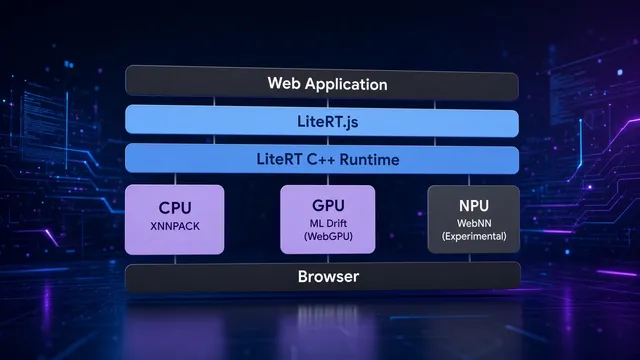
Google Brings LiteRT Inference to the Browser With WebGPU
Google has brought its LiteRT on-device inference stack to the browser, with XNNPACK on CPU, ML Drift over WebGPU, and experimental WebNN support for NPUs.

WASI-WebGPU 0.3 RC Takes GPU Compute Beyond the Browser
The Phase 2 wasi:webgpu proposal has a 0.3 release candidate, mapping WebGPU-style GPU access into WASI for portable, sandboxed compute across servers, desktops, Android, and the web.
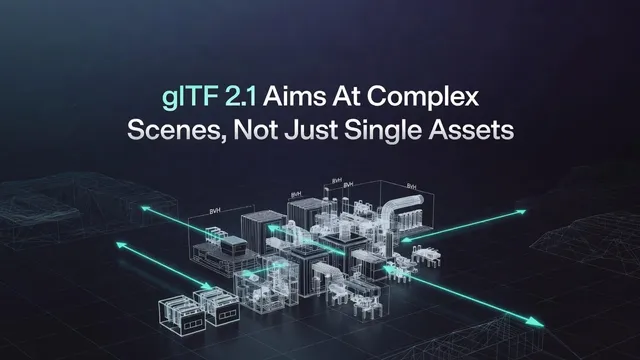
glTF 2.1 Aims At Complex Scenes, Not Just Single Assets
Khronos is planning glTF 2.1 as a backward-compatible update focused on large composed scenes, external assets, packaging, BVHs, thumbnails, and 64-bit GLB files.
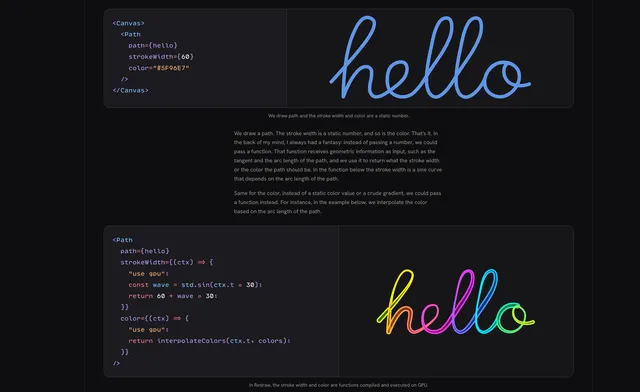
Redraw Brings WebGPU Shaders to 2D Paths
William Candillon’s Redraw explores WebGPU-native 2D path rendering, with programmable Bézier geometry, variable stroke widths, vector feathering, and TypeScript shader functions.
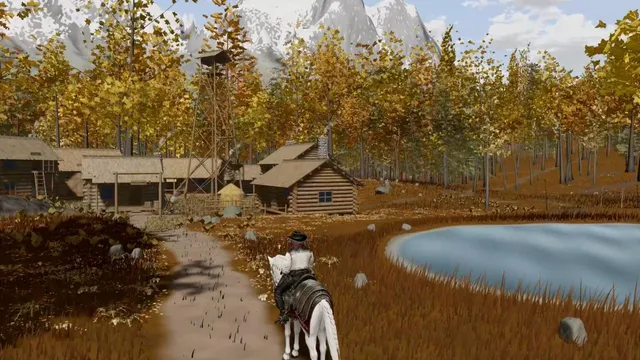
Kimi K3 Uses Three.js WebGPU for an AI-Built 3D Game Demo
Moonshot’s Kimi K3 launch includes a notable WebGPU case study: an AI-built procedural 3D exploration game using Three.js WebGPU and GPU compute.
Chrome 149-150 Brings Immediates to WebGPU
Chrome 149-150 adds WebGPU immediates, tightens transient attachment validation, and continues Dawn cleanup work. Small changes, but useful ones for developers pushing many tiny per-draw updates.
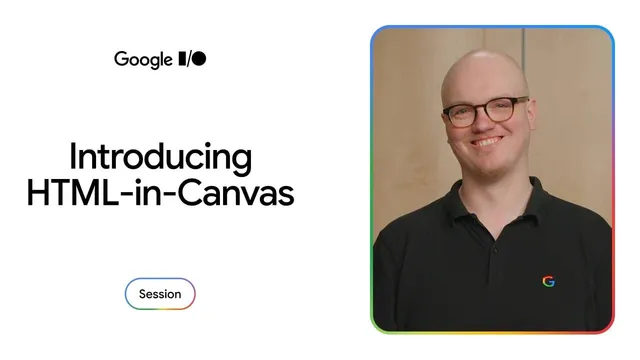
Google Introduces HTML-in-Canvas API: Accessible UI Meets WebGL / WebGPU
At Google I/O 2026, Chrome engineer Thomas Nattestad unveiled the HTML-in-Canvas API, which is a new web platform feature that lets developers render HTML elements directly into canvas, WebGL, and WebGPU contexts while preserving accessibility and interactivity.

WebGPU Meets Zero-Knowledge: Can Browser-Based Proving Finally Work?
zkSecurity integrated WebGPU compute shaders with StarkWare's Stwo prover and hit 5x speedups on constraint polynomial evaluation.
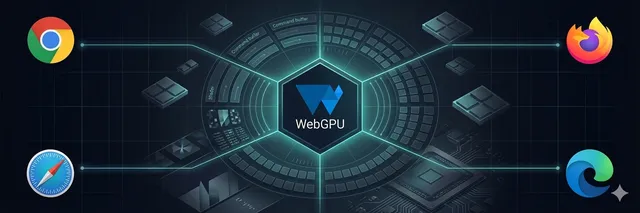
WebGPU Hits Critical Mass: All Major Browsers Now Ship It
Chrome, Firefox, Safari, and Edge all ship WebGPU by default. Eight years of spec work finally pays off. Here is what changed, where the gaps remain, and why this matters for graphics and compute on the web.